
The datil pepper is a distinctive St. Augustine favorite because it combines a sweet, fruity character with substantial heat and a strong local food tradition.
UF/IFAS rates datil peppers at roughly 100,000–300,000 Scoville Heat Units, comparable to habanero and Scotch bonnet peppers.
The Scoville scale measures pungency, not flavor quality, so a higher number doesn't automatically mean a better pepper, sauce, or meal.
Meet the pepper before the number
Datil belongs to Capsicum chinense and turns orange as it matures.
Its appeal goes beyond being hot: the flavor gives cooks something to balance with savory, acidic, or sweet ingredients.
St. Augustine’s connection to the pepper shows up most in sauces, chowders, and locally associated specialty products.
The exact story of its arrival has competing accounts, so avoid presenting a single colorful origin tale as conclusively proven.
Its longstanding local cultivation and present-day culinary role are enough to explain why it matters.
A food tradition can be meaningful even when no one has settled every detail of its beginning.
What creates the sensation of heat?
Capsaicinoids, including capsaicin, are the compounds associated with a pepper’s burning sensation.
They interact with heat-sensing receptors, which helps explain why spicy food can feel hot without raising the food’s temperature in the same way a stove does.
Heat tolerance differs among diners.
A pepper or sauce that seems pleasant to one person can feel overwhelming to another.
That makes cautious sampling more useful than boasting about endurance.
Use the flavor you enjoy as your guide.
What the Scoville number means
Wilbur Scoville developed the original test in 1912.
It used dilution and trained tasters to identify when pepper pungency could no longer be detected.
More dilution corresponded with a higher reported heat value.
Modern laboratory analysis can measure capsaicinoids and express results on the same scale.
NIST describes high-performance liquid chromatography as a more reproducible analytical method than reliance on tasters alone.
The familiar initials SHU stand for Scoville Heat Units.
Put datil in perspective
Bell peppers sit at the mild end with 0 SHU, while jalapeños usually fall in a much lower range than datils.
Using NIST’s approximate examples, jalapeños are around 2,000–8,000 SHU and Thai peppers around 50,000–100,000.
Datil’s reported range of 100,000–300,000 SHU places it firmly among hot peppers.
These ranges are orientation tools, not guarantees for a particular fruit.
Growing conditions and individual variation matter.
Two peppers from the same named type can produce different experiences, and a prepared food adds another layer of variation.
A pepper’s rating is not a sauce’s rating
A bottle containing datil peppers also contains the rest of its recipe.
Water, vinegar, fruit, vegetables, sweeteners, and other ingredients can affect concentration and the sauce's taste.
A label that names a pepper does not establish a measured SHU for the finished product.
Ask whether a claimed number refers to the fruit, an ingredient concentrate or an actual tested batch of sauce.
That is a useful consumer question, rather than a demand that every small producer operate a laboratory.
Clear descriptions help people choose products they will enjoy.
The industry begins with growing
The local pepper story includes gardeners, commercial growers and the work of getting a usable ingredient to cooks.
A grower makes choices about plants, harvest and handling before a bottle or restaurant dish exists.
UF/IFAS identifies commercial cultivation in St. Johns and Putnam counties alongside home gardens.
That regional connection matters: a St. Augustine-associated product can depend on people working beyond the city limits.
Ask producers where their peppers come from if that is part of why you want to buy.
Describe local identity and a supply-chain address accurately.
|
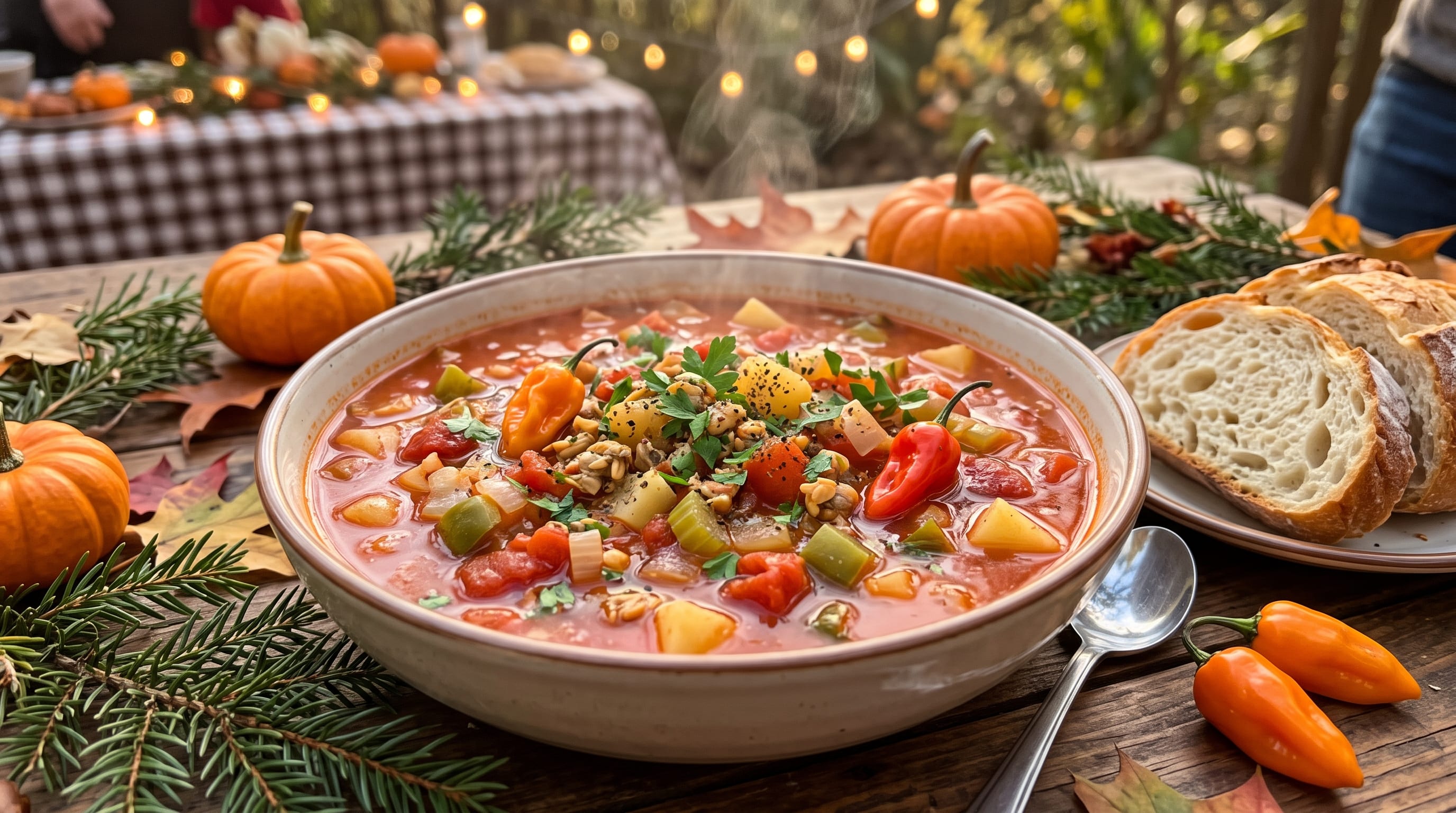 A Festive Bowl of Minorcan Clam Chowder |
Sauce making adds another business
A sauce producer turns the crop into a recipe, brand and repeatable customer experience.
Flavor consistency, packaging, labeling and distribution all contribute to the product you find on a shelf.
There is room for different approaches, from a sauce designed for everyday meals to a specialty item aimed at enthusiastic pepper fans.
The commercial opportunity is broader than selling the hottest possible bottle.
A maker who explains how to use a product gives a customer a reason to return.
That practical relationship can be more valuable than a dramatic number.
Shops and restaurants bring the story to people
A specialty-food retailer helps customers compare flavors and find products that suit their preferences.
A restaurant introduces the ingredient within a complete dish, where balance matters more than the pepper alone.
Together, those businesses connect growers and producers with visitors and residents.
If tasting is offered, begin small and ask what you are sampling.
Do not assume the next bottle is milder because its color looks similar.
Names, labels and packaging are introductions; the recipe determines what you actually experience.
Heat is only one way to compare
When trying sauces, consider sweetness, acidity, texture and the food you want to use them with.
A spoonful suited to a glaze may behave differently from one intended as a table condiment.
Compare a small amount on a familiar food rather than sampling large quantities without context.
Keep notes about the product and how you used it.
That turns a tasting into a practical choice for your kitchen.
There is no need to collect products you will never enjoy simply because their labels claim more intensity.
Growing at home can deepen the connection
A datil plant offers another way to learn about the ingredient.
Use local extension guidance for planting, shade, drainage and pest concerns rather than assuming every pepper behaves identically.
A container may suit a smaller space, but it still needs appropriate conditions and attention.
Keep hot peppers away from places where children or pets may handle them unexpectedly.
UF/IFAS recommends gloves for harvesting and handling.
A home-growing experience is a chance to observe the crop, not proof that your fruit matches a published heat number.
October and November are a useful moment to ask
UF/IFAS describes a normal harvest season extending from July through November.
Actual availability depends on the grower and conditions, so contact a producer or market before planning a purchase around fresh fruit.
If only bottled products are available, that can still be a worthwhile introduction.
Ask the maker which food best demonstrates the flavor.
A conversation can connect the bottle to a garden, recipe or business decision.
That is the local story behind the heat.
Recap: discover the flavor and the people behind it
Datil is a hot pepper with a distinctive flavor and a strong St. Augustine connection.
Scoville numbers help describe pungency, while the finished recipe determines what reaches your plate.
Growers, sauce makers, shops and restaurants form the wider enterprise around the ingredient.
Sample thoughtfully, ask useful questions and choose the product you want to cook with again.
Talk soon, Bill Marks The First Coast Team of COAST & HOME |
0 Comments
Join the conversation
Be the first to comment
Share your thoughts above.