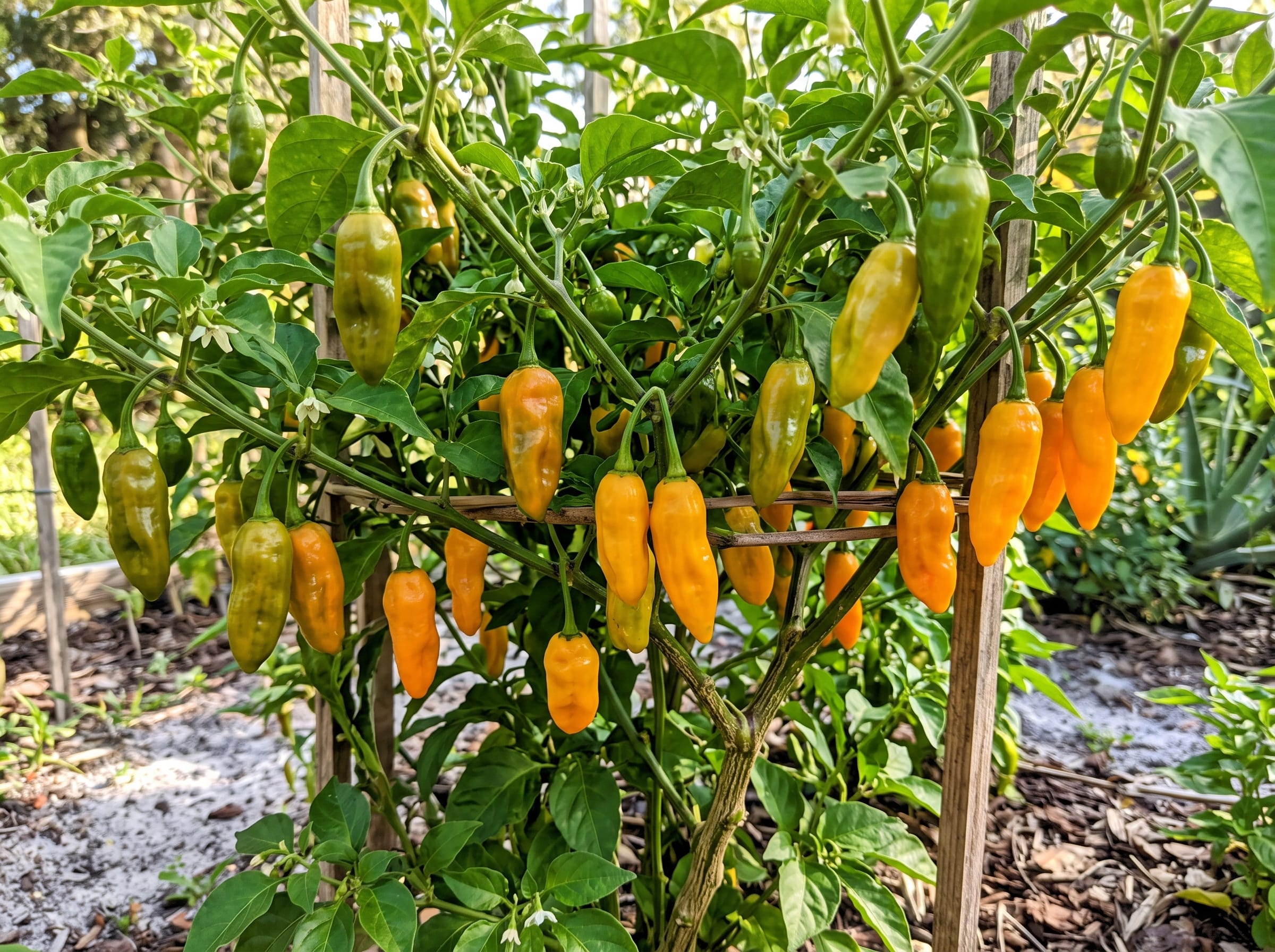
Datil peppers combine substantial heat with a sweet, fruity character and a strong St. Augustine food connection.
UF/IFAS reports a range of roughly 100,000–300,000 Scoville Heat Units, comparable with habanero and Scotch bonnet peppers. That range describes the pepper, not every finished sauce containing it.
The Scoville scale measures pungency. Its original dilution-and-taster method dates to 1912, while modern laboratory analysis can measure capsaicinoids and express the result on the same scale.
A higher rating does not establish better flavor. When comparing products, ask about sweetness, acidity, texture and the food you want to use them with.
The local enterprise reaches from gardeners and commercial growers to sauce makers, retailers and restaurants. Each contributes something different to the product or dish.
Ask where peppers are grown and whether any heat claim refers to the fruit or to a tested finished product. Clear descriptions are more useful than assuming a bottle’s pepper name tells the whole story.
Home growers can use local extension guidance for care and handling. Fresh-fruit availability depends on conditions and the producer, even within the usual harvest season.
Our recap: choose flavor over a heat contest, sample cautiously, and let a conversation with the people behind the product deepen the discovery.