Why Coquina Stone Matters to St. Augustine |
Read the Castillo as a story of local geology, engineering and the people whose labor made it possible |
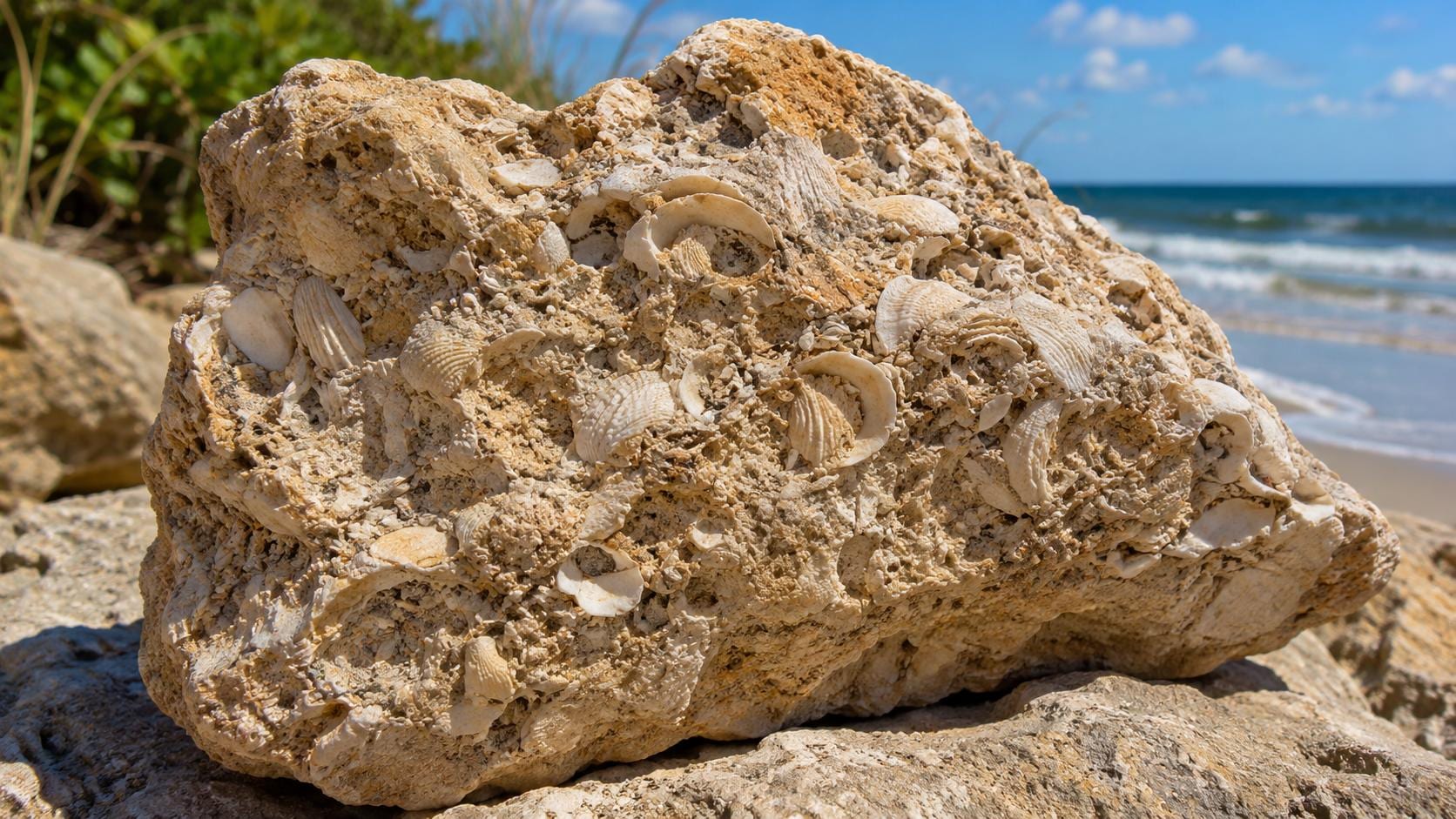 Tiny shell fragments within coquina illustrate a distinctive natural material connecting northeast Florida's landscape with its built history. AI illustration. |
Coquina matters because it connects the First Coast's natural landscape with one of its most recognizable buildings. The shell-rich limestone used in the Castillo de San Marcos was not merely a decorative choice. Its properties influenced construction and defense, while quarrying and building depended on a workforce whose experiences deserve attention. Looking at the stone raises a more revealing question than simply asking how old the fort is: what made this particular structure possible in this particular place?
Begin with the material you can seeThe National Park Service (NPS) describes coquina as a porous limestone made from cemented shell fragments. That distinction helps explain why a close look at an authorized viewing point can be more interesting than a distant photograph. Notice the texture without touching, scraping, or removing material. You do not need to identify every shell to understand that the wall began as part of a coastal geological process. A useful family activity is to describe what is visible first, then compare those observations with thepark'ss explanation rather than guessing from appearance alone.
Connect the island with the waterfront.NPS identifies the quarry area in present-day Anastasia State Park as a source of theCastillo'ss stone. That link turns two apparently different outings into connected chapters: the island landscape and the fortified waterfront. Check the state park's official information before planning a quarry visit, because a historical connection doesn't guarantee current trail access or a guided program. You can explore the idea in either order. Begin with the building and ask where its material came from, or begin with the landscape and ask how people transformed it into a defense.
Ask what problem the builders faced.The Castillo's construction story belongs to colonial competition and the need for a stronger defense. A local stone supply was only part of the answer; builders also needed skilled design, tools, transport, labor, and sustained resources. Instead of imagining the fort appearing all at once, ask how those requirements would have interacted. Where would material be gathered? How would a heavy piece reach its destination? Which tasks would require experience? These are prompts for engaging with interpretation, not claims that a modern visitor can reconstruct every historical method by looking at the finished walls.
|
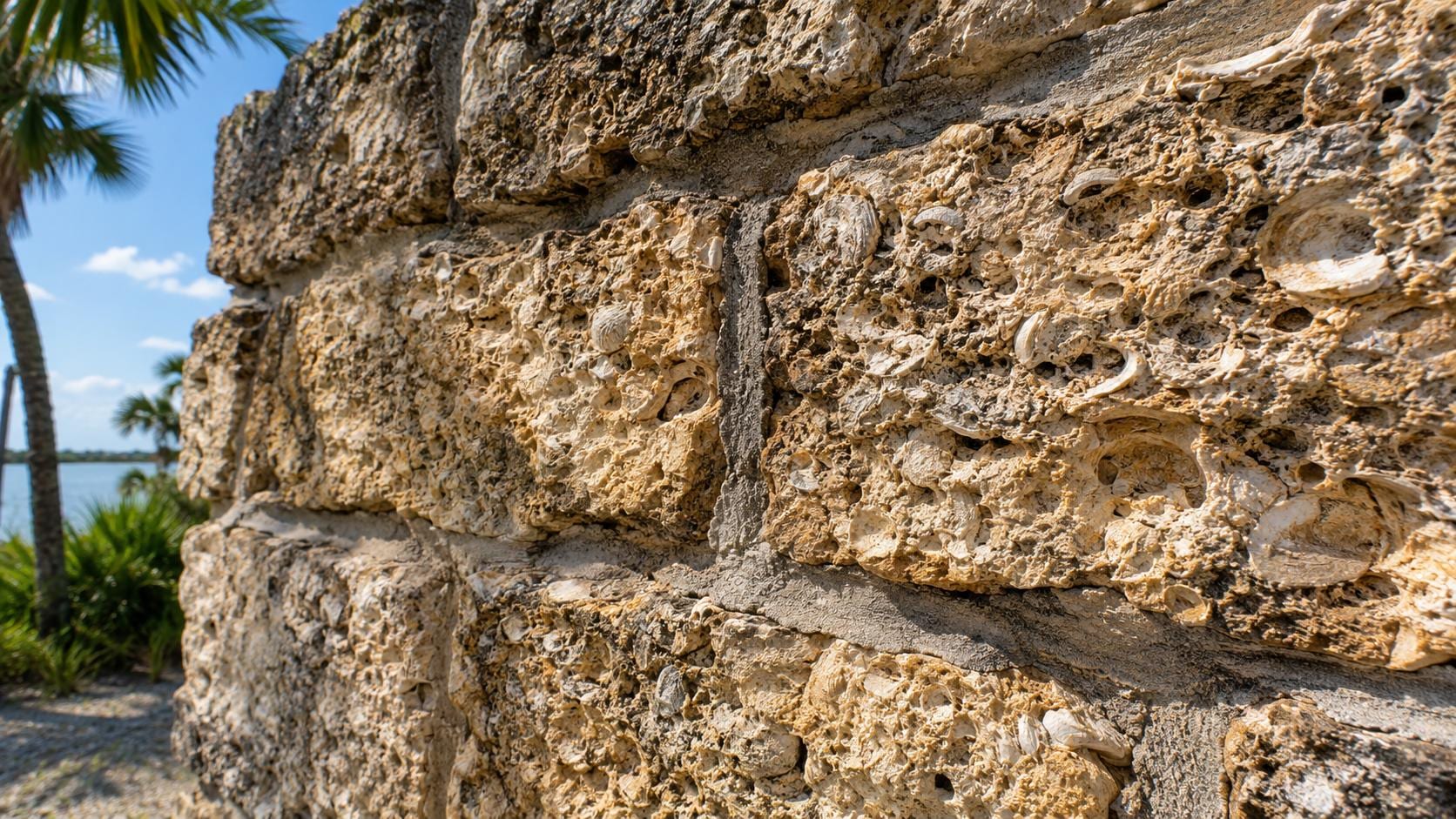 Sunlight reveals shell textures and mortar joints in coquina masonry, illustrating how a familiar building material rewards a closer look. AI illustration. |
Understand the engineering without making it magic.NPS explains that Coquina's porous structure helped thick walls absorb or deflect cannon impacts. That is more precise than saying the rock was indestructible or that a shell fort could never be damaged. Material, thickness, design, and the circumstances of an attack belong in the same discussion. Ask a ranger or consult thepark'ss interpretation to understand the defensive system. Avoid turning one memorable material fact into the whole explanation for a complex history. The remarkable feature is how people used the available stone, not a claim that the stone solved every problem.
Keep the workforce in the picture.The park's account of who built the Castillo describes Native people forced into service, alongside other laborers including free and enslaved Africans. That history should stay visible when we admire the architecture. Engineering achievements and coercion are not mutually exclusive parts of the story. Read the dedicated NPS account rather than treating every worker as an unnamed volunteer. When discussing the fort with children, distinguish a ruler's decision to build from the experiences of people required to do the work. A beautiful surviving structure can lead to difficult questions that make the visit more worthwhile.
Look for the choices inside the design.After learning about the material, step back and consider the building's shape. NPS explains the Castillo through a bastion system developed for gunpowder-era defense. Use the visitor interpretation to connect the projecting forms, walls, and surrounding space. A casual photograph can flatten those relationships. A slower visit lets you ask what a particular position allowed a defender to see or do. Stay within open visitor areas and follow staff instructions. Understanding the design does not require climbing on features, handling protected surfaces, or entering a closed area for a better angle.
|
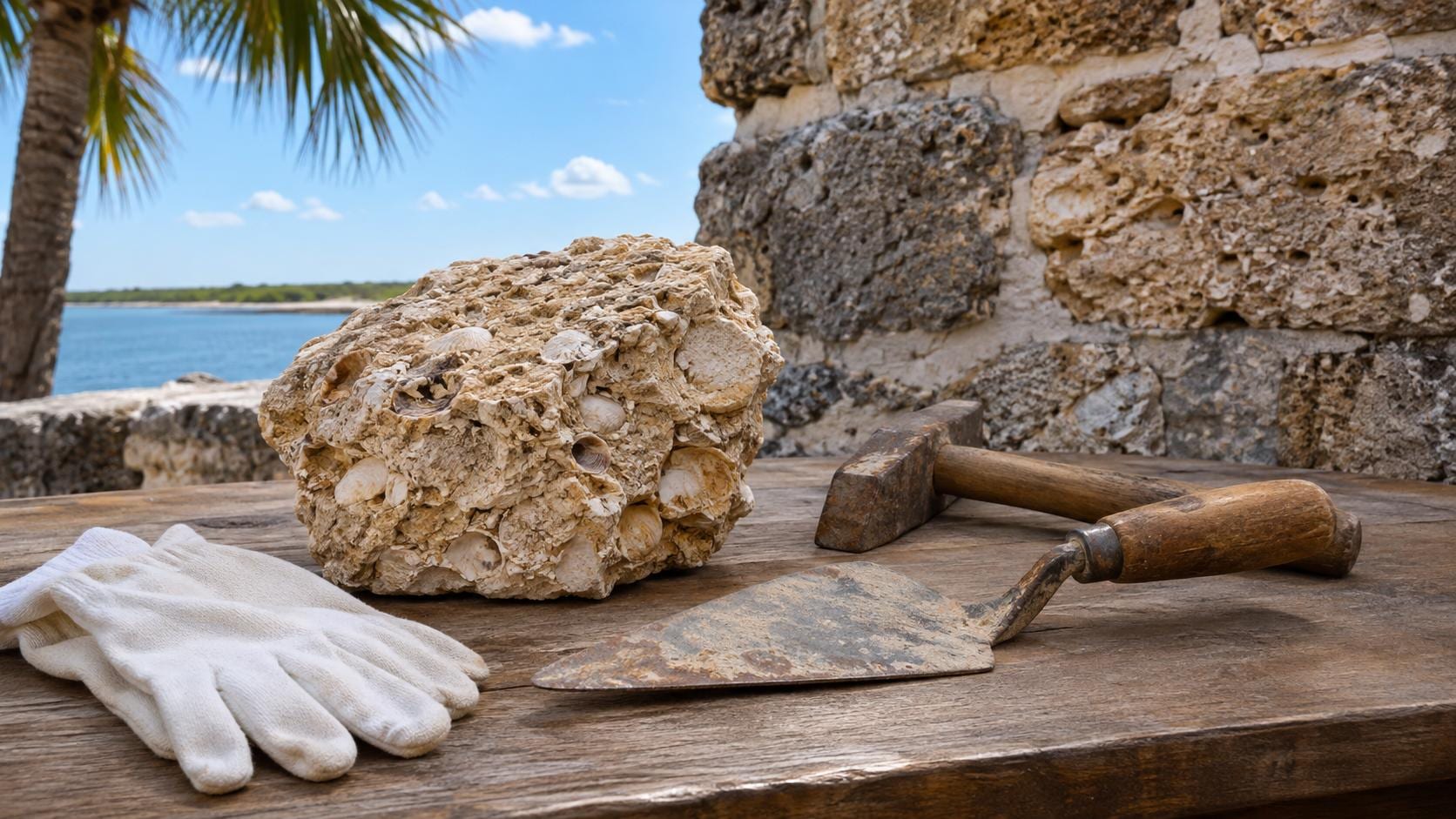 A stone sample and masonry tools illustrate the relationship between natural materials, skilled labor and the care of historic buildings. AI illustration. |
Understand the engineering without making it magic.NPS explains thatCoquina'ss porous structure helped thick walls absorb or deflect cannon impacts. That is more precise than saying the rock was indestructible or that a shell fort could never be damaged. Material, thickness, design, and the circumstances of an attack belong in the same discussion. Ask a ranger or consult thepark'ss interpretation to understand the defensive system. Avoid turning one memorable material fact into the whole explanation for a complex history. The remarkable feature is how people used the available stone, not a claim that the stone solved every problem.
Keep the workforce in the picture.Thepark'ss account of who built the Castillo describes Native people forced into service, alongside other laborers including free and enslaved Africans. That history should stay visible when we admire the architecture. Engineering achievements and coercion are not mutually exclusive parts of the story. Read the dedicated NPS account rather than treating every worker as an unnamed volunteer. When discussing the fort with children, distinguish a ruler's decision to build from the experiences of people required to do the work. A beautiful surviving structure can lead to difficult questions that make the visit more worthwhile.
Look for the choices inside the design.After learning about the material, step back and consider the building's shape. NPS explains the Castillo through a bastion system developed for gunpowder-era defense. Use the visitor interpretation to connect the projecting forms, walls, and surrounding space. A casual photograph can flatten those relationships. A slower visit lets you ask what a particular position allowed a defender to see or do. Stay within open visitor areas and follow staff instructions. Understanding the design does not require climbing on features, handling protected surfaces, or entering a closed area for a better angle.
|
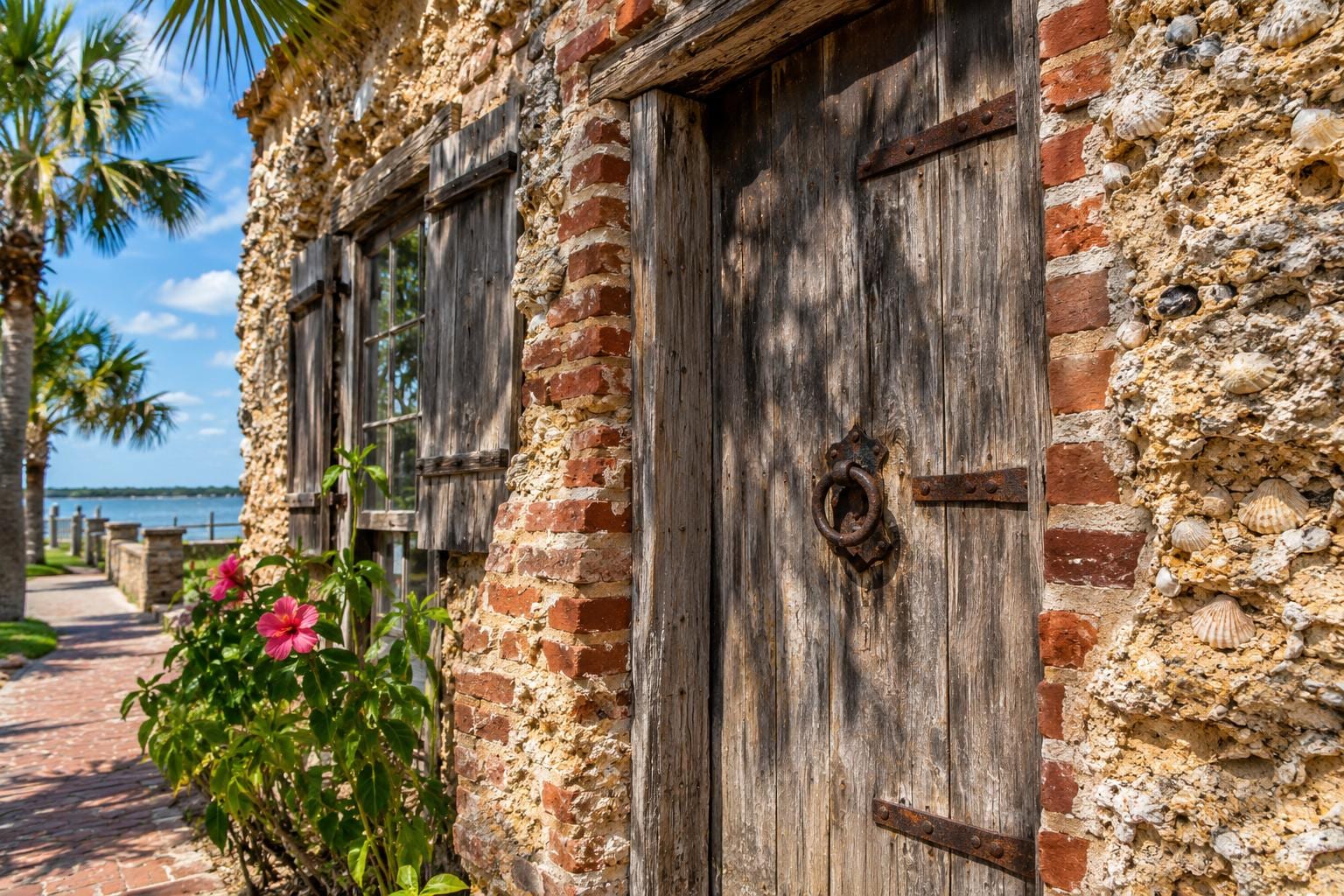 Weathered wood, brick and shell-rich stone invite a closer look at the materials and small details that give historic streets their character. AI illustration. |
Let conservation change the way you visitJust because a material has survived for centuries doesn't mean you can treat it casually. Follow signs about where visitors may walk, sit and touch. Keep food, equipment and children’s activities compatible with the site’s rules. If you notice a repair or a closed section, use it as a prompt to ask how historic places are maintained rather than assuming the work is cosmetic. Conservation is part of the present-day life of a monument. A good visit includes respecting the people and processes that allow the next visitor to encounter it.
Make a small observation exerciseChoose three things to investigate: the visible texture, one feature of the defensive layout and one part of the labor history. Before leaving, have each person explain a connection in ordinary language. Someone may remember the shells, another the movement of stone, another the workforce. Those different observations can coexist without turning the outing into a quiz. If a question remains unanswered, save it for a reliable source instead of filling the gap with a plausible story. The most useful souvenir may be a question that changes what you notice elsewhere in town.
Compare places without blending their historiesFort Matanzas offers another opportunity to encounter coquina in a different defensive setting. It should not be described as a smaller copy with an identical story. Read that monument’s own interpretation and current visitor information before extending the outing. Likewise, a shell-textured surface elsewhere in Saint Augustine is not automatically the same material, age or construction process as the Castillo. Ask the responsible institution about the specific building. A local pattern becomes more interesting when its differences remain visible, and a comparison becomes more trustworthy when we resist making every example fit one explanation.
|
Quote of the Day |
"It is not the beauty of a building you should look at; it's the construction of the foundation that will stand the test of time."
|
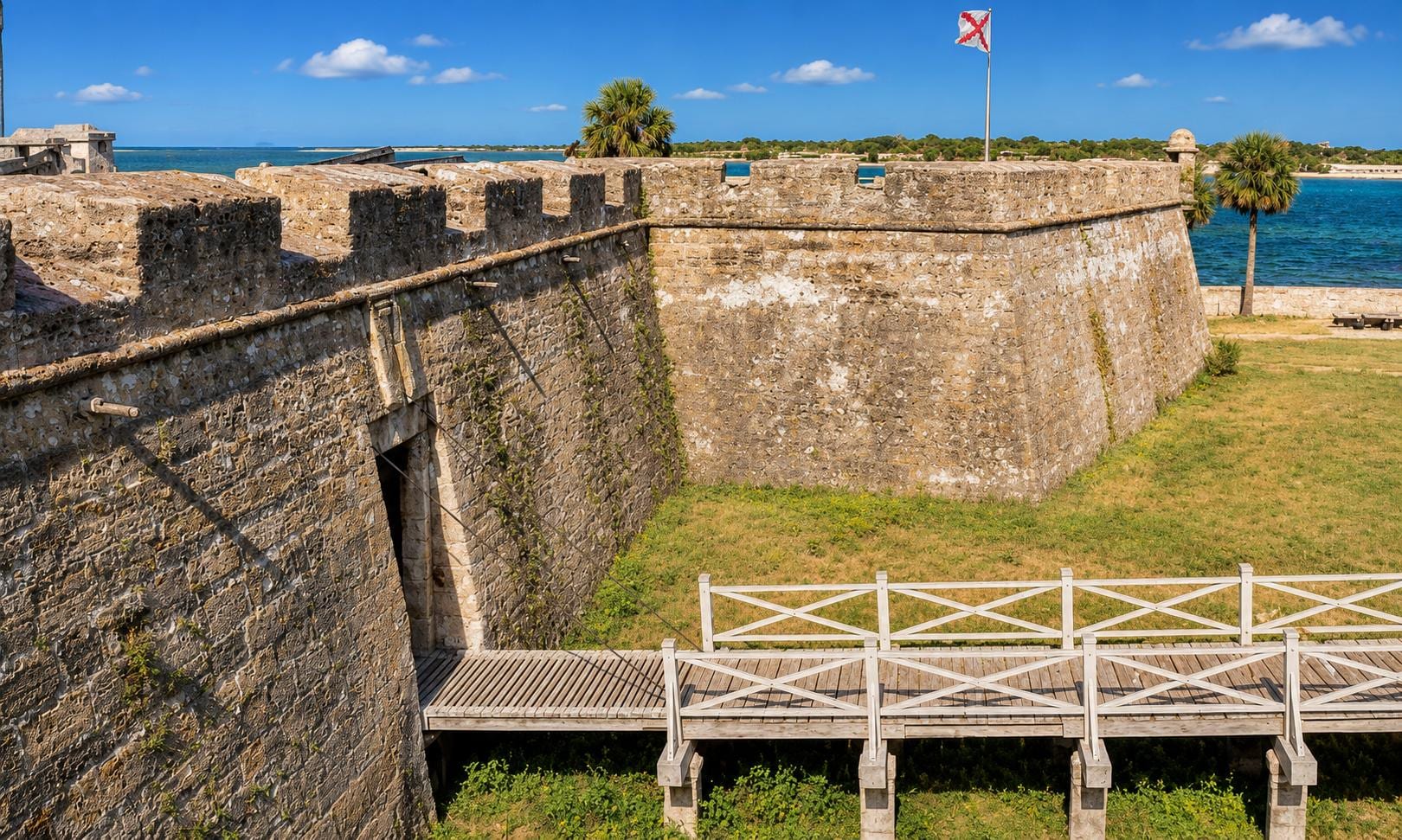 Sunlight falls across Castillo de San Marcos and its entrance bridge, evoking the stone landmark at the heart of St. Augustine's history. AI interpretation. |
0 Comments
Join the conversation
Be the first to comment
Share your thoughts above.