
Fort Matanzas: A Small Outing With One Important Planning Step |
Check the ferry arrangements before putting the fort on your weekend itinerary. |
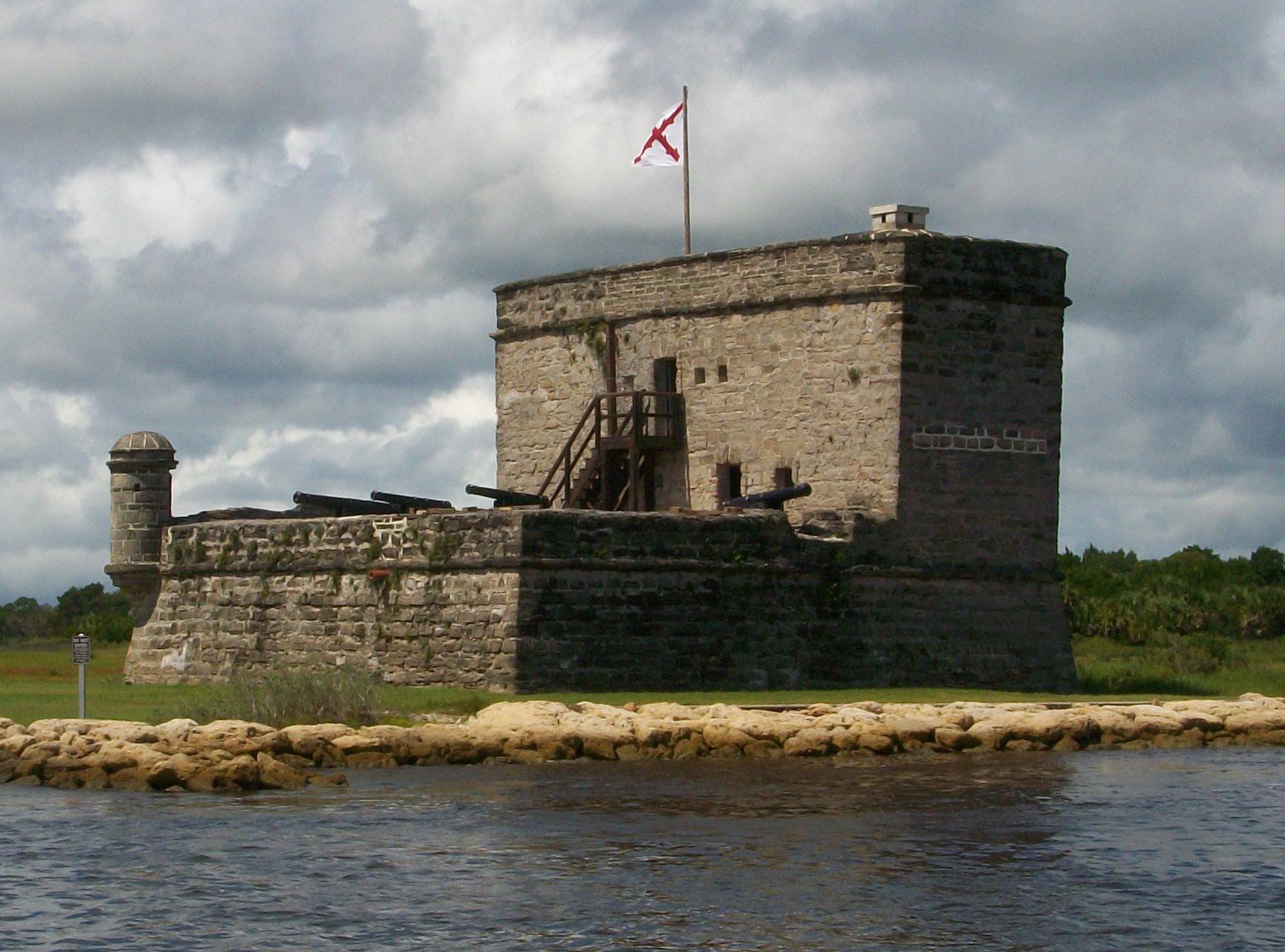 <p style="font-family:Tahoma,Arial,sans-serif;font-size:10px;">Fort Matanzas National Monument. Photo: National Park Service.</p> |
Fort Matanzas can be an appealing addition to a Saint Augustine discovery day, but it is an outing that rewards checking the details first. Getting to the fort is part of the plan, not an assumption to leave until arrival. Before choosing a date, read the National Park Service's current ferry information and decide what works for your group.
The official planning page currently states no ferry service on Tuesdays and Wednesdays. It also says there is no fee to enter the park or take the ferry, but boarding passes are required and issued at the Fort Matanzas Visitor Center on a first-come, first-served basis. Every passenger, including children, needs a pass.
Make the crossing your first check
Those arrangements mean you should not build a tightly timed itinerary around an assumed crossing. Review current park alerts and ferry information before departure. If a specific visit time is essential to your day, contact the park about current arrangements rather than interpreting a general description as a reservation.
Choose a fallback that you would enjoy if your preferred crossing is unavailable. The point is not to expect a problem; it is to give your group a workable day without turning one uncertain step into disappointment. Leave some flexibility between this outing and any separate meal or attraction booking.
Consider everyone's access needs
The National Park Service explains that the fort itself is not wheelchair accessible and requires climbing 15 steps to enter. Access to other parts of the park is different, so ask about the specific experience you hope to have. An accessible boat does not automatically make the destination accessible to every passenger.
Discuss that distinction before setting out. Family members may prefer different parts of an outing, and it is better to understand those preferences than to discover a mismatch at the dock. Choose a visit that gives everyone a meaningful plan without requiring them to take on a physical task they did not anticipate.
Give history room to land
Our suggestion is to treat the outing as a chance to ask a focused question about the coast and its defenses. Use park interpretation to develop the answer instead of relying on the idea that every fort tells the same story. A visit becomes more memorable when a detail connects the place with something you genuinely want to understand.
For seasoned residents, this may be a return to a place they have not visited in years. New neighbors can use it to expand their exploration beyond downtown. Visitors staying several days can give it a distinct slot rather than trying to squeeze another destination into an already crowded first afternoon.
Keep the practical plan light
The park lists 8635 A1A South, St. Augustine, FL 32080 as its address and warns that parking is limited. Confirm travel and parking arrangements before leaving, especially if you are using a larger vehicle. Check the rules for pets separately; permission in one part of the park does not extend automatically to the ferry or the fort.
Bring what you need for an outdoor visit and leave enough time to follow the park's instructions calmly. The best itinerary is one your group can comfortably use, with room to enjoy the setting rather than constantly checking whether you are running behind.
|
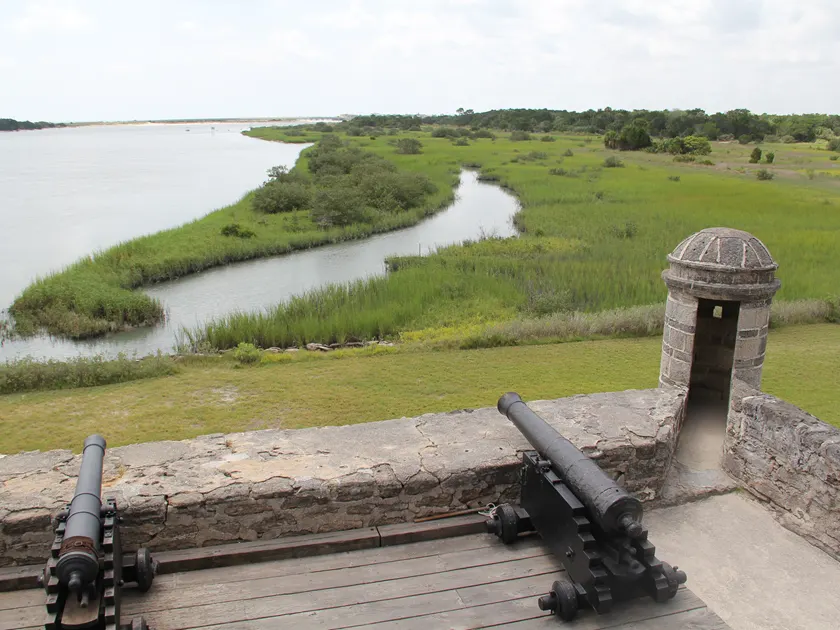 Southern view from the Fort Matanzas National Monument, atop the fortified coquina watchtower, completed in 1742, and defending the southern approach to the early Spanish military settlement of St. Augustine, Florida. |
Put the fort into the coastal story
The National Park Service's historical overview explains that Fort Matanzas was built to guard St. Augustine's southern approaches after the British threat of 1740. Think about the inlet as part of that defensive problem rather than seeing the fort as an isolated building. What could approach from this direction, and why did the coast need another fortified position beyond the larger Castillo downtown?
Keep the chronology clear when discussing the name. The NPS connects the naming of Matanzas with the killing of French Huguenots in 1565, long before construction of the fort. Those are related parts of the area's history, but they are not the same event. A thoughtful visit gives difficult history its own context instead of reducing the name to a colorful anecdote or implying that the visible structure witnessed everything associated with the river.
Compare two places without combining their stories
If you have also visited the Castillo, use Fort Matanzas to ask a different question. How does a smaller position guarding an approach differ from a larger city fortress? Look for answers in park interpretation rather than judging only by size or the number of rooms. The two sites can deepen your understanding of the same region while serving distinct purposes, and they do not need to be toured in a single crowded day.
For a family discussion, ask each person to notice one feature and describe what it might help explain. Then check that interpretation against the park's account. This can make the visit participatory without turning guesses into facts. A child might notice the water first, while an adult might focus on the building material; those observations can become complementary questions rather than a competition to remember the most dates.
Make the ferry plan visible to everyone
Before departure, share the official planning link with anyone meeting you separately. State which parts of the outing depend on ferry access and which decisions remain flexible. Do not tell one household to arrive for a “reserved crossing” when the park uses first-come boarding passes. If your party needs to travel together, ask staff how to handle passes for the whole group rather than assuming separate arrivals will be assigned the same departure.
Pack for the part of the day you intend to spend outdoors, but check current rules for what can be taken aboard. Keep important belongings manageable so you can follow boarding instructions comfortably. If someone in your group is uncertain about the crossing or the steps at the fort, discuss that before you reach the dock. Choosing an alternative is easier when everyone understands the options ahead of time.
Leave with a question worth following
A worthwhile history outing can end with a subject to explore later. You might want to learn more about the inlet, the relationship between the forts, or the people who lived and worked in the region. Record the question and the source that raised it. That is a stronger starting point for another visit than a vague sense that you should eventually learn “more history” without knowing where to begin.
For our First Coast coverage, a reader's practical account can also lead to a more focused article. Tell us which part of the visit you used, when you went, and what helped your group make the day work. Someone who explored the mainland should describe that experience clearly, rather than implying they entered the fort. Accurate distinctions make the recommendation useful for neighbors with different interests and access needs.
After your visit, tell us what a first-timer should know before setting out. A useful local recommendation includes the planning detail that made the experience work—not just a photograph of the destination. That is exactly the kind of advice we want on our growing First Coast bucket list.
|
Quote of the Day |
“The way to speak and write what shall not go out of fashion is to speak and write sincerely.”
American essayist and lecturer (1803–1882).
Emerson visited St. Augustine in 1827. This quotation is from his essay “Spiritual Laws”. |
0 Comments
Join the conversation
Be the first to comment
Share your thoughts above.