
The Lighthouse Is More Than the View From the Top |
Build a maritime outing around your group's interests, with the tower climb as one possible part of the day. |
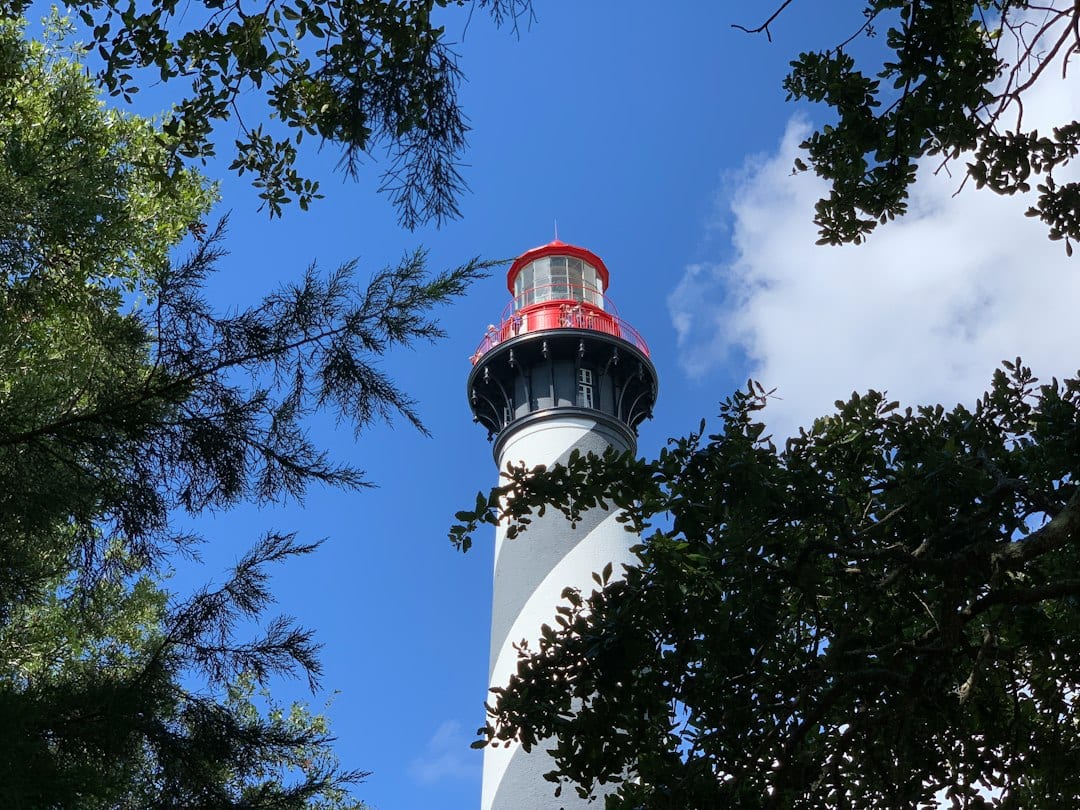 The current St. Augustine Lighthouse has actually never stopped functioning and remains an active aid to navigation today. The original, earlier lighthouse on the property was lit for the last time in October 1874 when the present-day tower was completed. |
The tower is the obvious starting point when someone mentions the St. Augustine Lighthouse & Maritime Museum. But a good visit does not have to be measured only by whether you reach the top. The museum's own visitor information offers several ways to explore maritime life, making it worth considering for a mixed group with different interests and abilities.
At 100 Red Cox Drive, St. Augustine, FL 32080, the site combines a working historic lighthouse with museum experiences. The official visit page lists a 219-step tower climb and a 44-inch minimum height for climbers. It also describes exhibits and activities beyond the tower, so decide what suits your party before turning the climb into everyone's assumed objective.
Choose the experience before the ticket
Ask a simple question: what would make this visit worthwhile for each person coming along? Someone may want the view, someone else may be interested in maritime history, and a younger visitor may prefer hands-on activities. Those priorities can help you choose how to use your time instead of reacting to whatever you notice first.
The museum describes exhibits in the Keepers' House, an artifact conservation lab and a view-from-the-top video in its Maritime Education Center. Check the current exhibit information and access guidance when planning. Having an alternative to the climb is useful, but it should be matched to your actual needs rather than treated as a blanket promise of access everywhere.
Give the climb its own decision
If you intend to climb, read the safety rules carefully. The museum prohibits carrying children in the tower and says eligible children must climb under their own power. Weather can close the tower, so a ticket and an optimistic forecast do not remove the need to check conditions.
Build your plan around what your group can comfortably enjoy. A visit should not become a test of determination for someone who would rather explore at ground level. Discuss that choice beforehand, especially if family members have different expectations about what the outing will involve.
Look for the human story
For a seasoned resident, a return visit can begin with a different question: what did daily work at a light station require? For a new neighbor, maritime history can provide another way to understand the community. For a short-stay visitor, choosing one theme can make the experience more memorable than trying to absorb every label.
You might focus on a tool, an artifact or the relationship between a building and the people who used it. Ask staff which current exhibit best fits that interest. Do not worry about finishing the entire site in one visit; finding one story you can explain afterward is a worthwhile result.
Specialty tours need a separate check
The museum lists additional experiences, including a Lighthouse Keepers' Tour and twilight and ghost offerings. These should be treated as separate booking choices, not automatic additions to a general visit. Check dates, pricing, availability and relevant age or height restrictions through the museum's own ticket links.
Its published October-to-February schedule is 9 AM–6 PM, with the last ticket at 5:30 PM, although special closures and tower schedules can differ. Review the visit page immediately before departure and allow enough time for the experience you have selected.
|
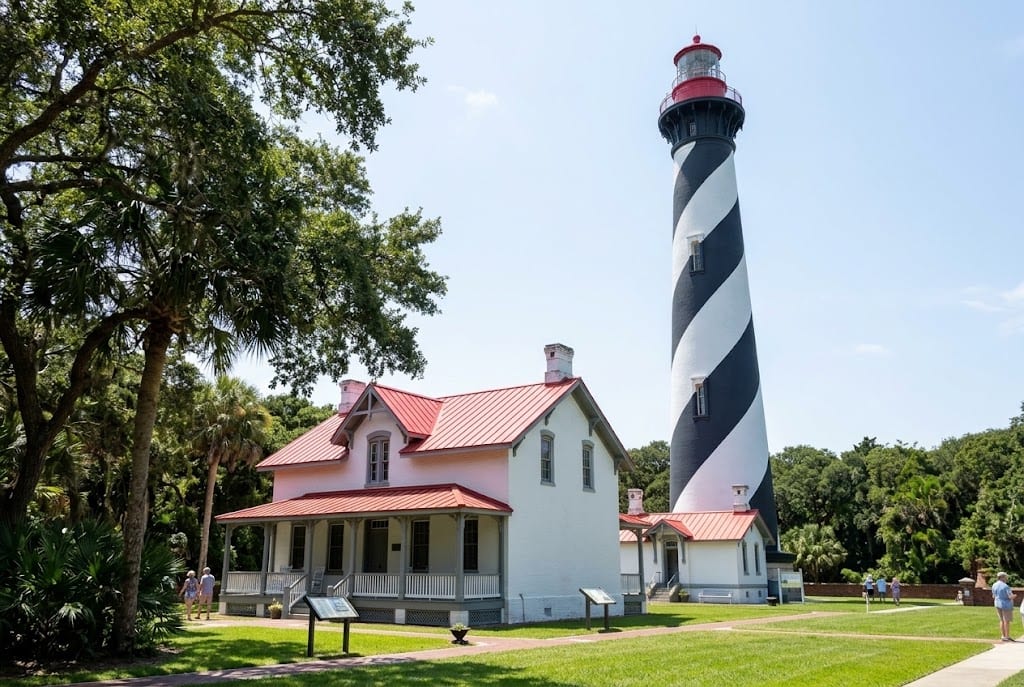 <p style="font-family:Tahoma,Arial,sans-serif;font-size:9px;">Visible from the side, the historic St. Augustine Lighthouse and Maritime Museum welcomes visitors daily to explore interactive shipwreck exhibits and climb its iconic striped tower.</p> |
Use the exhibits to choose a route through the site
The visitor page names several distinct themes beyond the tower. Keepers' House interpretation includes home life and shipwreck discoveries, while the Maritime Education Center offers a conservation lab and a view-from-the-top video. Other listed areas address World War II and traditional boatbuilding. These choices let you build an outing around an interest rather than assuming the site is a single activity with a staircase attached.
Pick one theme to start with, then leave the remaining choices flexible. A person interested in household life may approach the Keepers' House differently from someone curious about recovering objects from the water. Ask which current area fits your interest and whether any demonstration you hope to see is actually operating that day. The existence of a program on a website is not a guarantee that a particular volunteer or activity will be present during your visit.
Notice preservation as an ongoing task
A conservation lab offers a reason to think about what happens after an object is found. Rather than assuming a recovered artifact can go on display immediately, ask how the museum explains the work needed to study and preserve it. What information can an object reveal, and what questions remain? Let the interpretation guide your understanding. We have not assumed that a specific treatment, artifact, or staff demonstration will be visible at every visit.
This can become a useful conversation with younger visitors. Ask them to choose an object and consider what they would want to know about it before writing a label. Where was it found? How old is it believed to be? What supports that explanation? Those questions encourage curiosity while distinguishing evidence from imagination. A memorable museum experience can begin with noticing how knowledge is developed, rather than simply counting interesting things on display.
Leave room for ground-level discoveries
The museum lists a maritime hammock nature area and children's activities, including a knots board and stationary play boats. Check the current visitor guidance when selecting these parts of the outing. A pause outdoors or a hands-on activity can give a mixed group another shared experience, especially when some members climb, and others do not. Agree on a meeting point before splitting up so nobody is left wondering when the group will reunite.
Do not make the ground-level option sound like a consolation prize. Someone who chooses the exhibits may come away with a different story than someone who chooses the view, and both can contribute to the conversation afterward. Ask each person what caught their attention. That creates a more inclusive account of the visit than treating everyone who stayed below as though they missed the only worthwhile part.
Choose a return visit by interest
If a first outing raises a question about lightkeeping, archaeology, or boatbuilding, use the museum's current visit information to plan a more focused return. A specialty experience may be worthwhile when it answers a specific interest, but check its separate ticket conditions before purchasing. Don't describe an after-hours tour, a general daytime visit, and a seasonal event as interchangeable or automatically included with one admission.
When recommending the Lighthouse to a neighbor, identify the experience you actually used and the date you visited. Describe why it suited your group, and distinguish current confirmed information from a memory of an earlier tour. We would love a story about an exhibit that changed how you understand the coast, or a practical tip that made the visit work for different abilities. Those details can help our future coverage look beyond the familiar silhouette.
When did you last explore the Lighthouse beyond the climb? Tell us which maritime story deserves a place on our bucket list. The view may bring you through the gate; a detail you never considered might be what you remember most.
|
Keep exploring with usWhat did we miss that a neighbor should know? We welcome a practical question, a verified update or a local discovery for a future edition.
Talk soon,
Bill Marks
Reporting and official reference pages reviewed October 20, 2026. Recheck operating details and date-sensitive notices before visiting. |
Quote of the Day |
“The way to speak and write what shall not go out of fashion is to speak and write sincerely.”
— Ralph Waldo Emerson, American essayist and lecturer (1803–1882). Emerson visited St. Augustine in 1827. This quotation is from his essay “Spiritual Laws”. |
0 Comments
Join the conversation
Be the first to comment
Share your thoughts above.