
Put Fort Mose on Your Ancient City Discovery List |
A reconstructed fort and a story of freedom invite residents and visitors to look beyond the familiar landmarks. |
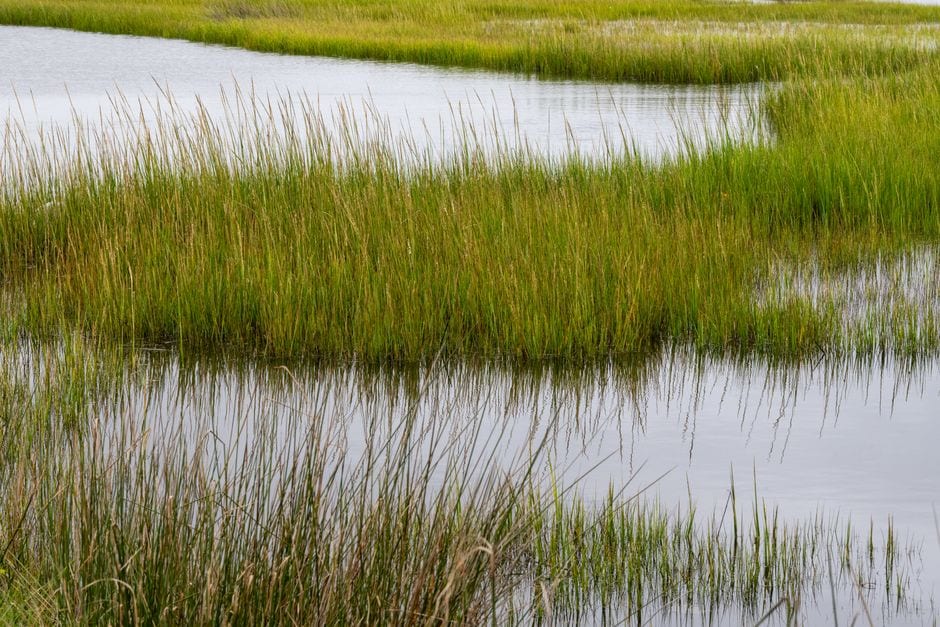 The coastal marsh reflecting the habitat surrounding Fort Mose. |
Some places belong on a Saint Augustine bucket list because they help change the questions we ask about the city. Fort Mose is one of them. A visit offers a reason to move beyond the most familiar downtown landmarks and give attention to people whose pursuit of freedom is central to the area's history.
Florida State Parks identifies Fort Mose as the site of the first legally sanctioned free African settlement in what is now the United States. Chartered in 1738, the settlement became a refuge for people escaping slavery in the English colonies. Those facts deserve time and context rather than a passing mention in a list of attractions.
Visit with a question
A useful first question is what freedom meant within the political and social conditions of that period. Another is how residents made a community after reaching the settlement. The park's historical material is a starting point for exploring those questions; visitors should avoid treating the story as a simple tale with every difficulty resolved by arrival.
If you are visiting with younger family members, ask what they already know before setting out. Let the outing become a conversation, with room for questions that may need further reading afterward. You do not have to turn a family visit into a formal lesson to make space for careful learning.
Understand what you are seeing
The state park's current visitor page describes a reconstructed fort, a museum, a boardwalk and the self-guided Flight to Freedom Trail. Its history page reports the completed reconstruction following decades of collaborative work. A reconstruction helps interpret the past; it should not be described as the untouched original building.
Keep that distinction in mind when taking photographs or sharing a recommendation. A clear caption can explain that the fort is reconstructed while still recognizing the importance of the historic site. The value of the visit does not depend on pretending every visible structure has survived from the eighteenth century.
Make it more than a check mark
For a seasoned resident, this could be the visit you have long intended to make properly. Choose one question to explore instead of arriving only to confirm that you have been there before. For a new neighbor, it offers an early opportunity to broaden an understanding of Saint Augustine beyond a single founding story.
For someone visiting for a weekend or a week, consider giving Fort Mose its own place in the itinerary. You can connect its themes with a later museum visit, but avoid compressing different histories into one indistinct stop. Let each institution speak through its own interpretation and material.
Plan an unhurried outing
The park lists 15 Fort Mose Trail, St. Augustine, FL 32084. Review its Hours & Fees page for the experience you want: the visitor center and museum operate Thursday–Monday, 9 AM–5 PM, while access to the reconstructed fort is tied to tours and scheduled events. The visitor center, museum, and fort are closed Tuesday and Wednesday.
Bring a manageable plan: explore the interpretation, pause over one detail and leave time to reflect. If physical access or the length of a walk matters for your group, contact the park about the specific spaces you hope to use. A thoughtful visit begins with making the outing workable for the people coming along.
Afterward, try answering one question in your own words: what did this place add to your understanding of the Ancient City? You may find that the strongest recommendation you can share is not a claim that everyone must do the same itinerary, but an explanation of why the story matters.
|
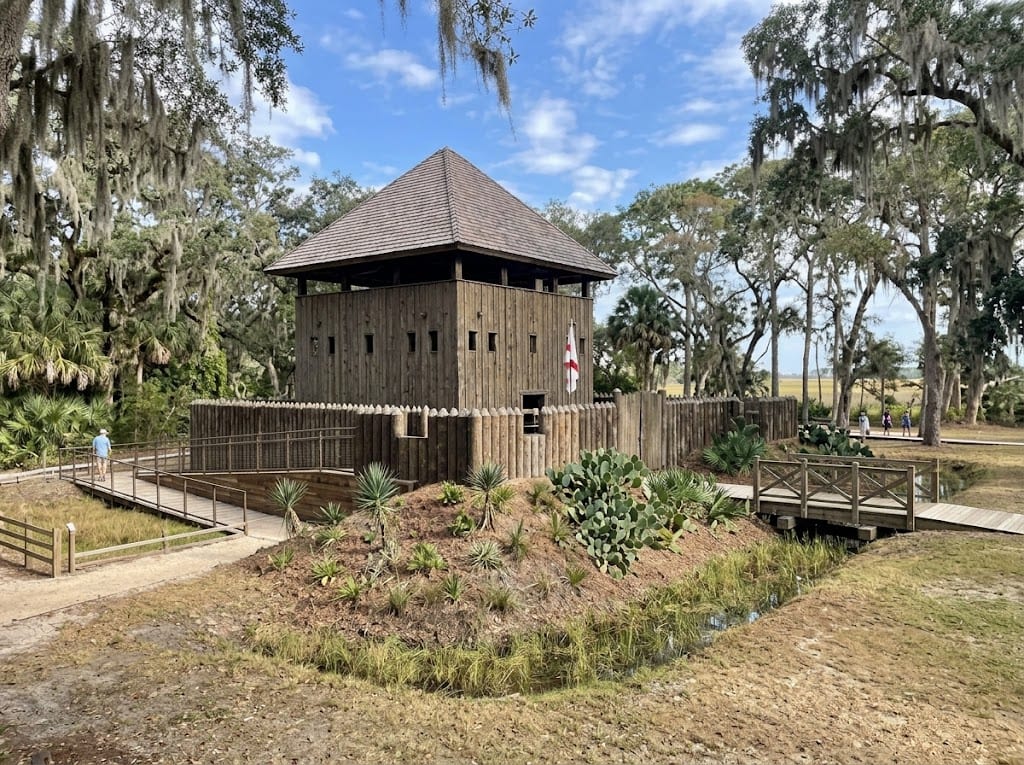 Repilica building of Fort Mose in St. Augustine, Florida |
Understand the difference between grounds, museum, and fort access
The park's Hours & Fees page separates these experiences. It lists the visitor center and museum as open Thursday–Monday, 9 AM–5 PM, with closure on Tuesday and Wednesday. The reconstructed fort opens during tours and scheduled events. That makes the general park-hours description insufficient if entering the fort is your main goal; confirm the appropriate tour or event before arranging your visit.
Decide which experience matters most to you before choosing a day. Someone seeking an introduction through the museum may have a different plan from someone hoping to join a fort tour. If you are taking relatives who have heard about the reconstruction, explain this distinction in the invitation. It is easier to create an enjoyable outing when everyone understands what the published schedule actually offers, rather than expecting access that has not been confirmed.
Explore the community through evidence
The Florida Museum's online Fort Mose exhibit offers another research starting point. Use it to investigate the people, settlement, and archaeological work rather than treating the site solely as a military structure. A question about daily community life can sit alongside a question about defense. The purpose is to recognize a settlement of people with lives and relationships, not reduce its significance to the outline of a fort.
When discussing archaeological material, distinguish what an object directly shows from a larger interpretation built around it. A surviving fragment may support a question about everyday life without telling us everything about its owner's experience. If you want to understand how researchers reached a conclusion, ask what evidence supports it. That approach gives children and adults alike a useful way to learn history without expecting every question to have an immediate, complete answer.
Keep the historical language precise
The phrase “first legally sanctioned free African settlement in what is now the United States” carries several important qualifications. Keep them when introducing Fort Mose to someone else. Do not shorten the story into a claim that freedom everywhere in the region followed from a single date, or suggest that the place was founded within the later United States. The historical setting matters to understanding the achievement and the conditions in which it occurred.
The reconstructed structure also needs precise language. Call it a reconstruction and identify the historic community it interprets. A photograph of the present fort can be valuable without presenting it as an original eighteenth-century building. If you share an image from somewhere else to illustrate coastal habitat, label that distinction too. Clear descriptions help readers understand what they are seeing before they decide what to explore in person.
Give the story a continuing place in your local knowledge
After a first visit, choose a next step that fits your interest. You might return for a confirmed program, explore another museum's interpretation, or read the university material more closely. Connect those experiences through questions rather than assuming different institutions tell identical stories. Each can offer a separate perspective on the people and events that shaped the region, and together they can deepen a resident's understanding over time.
We welcome reader suggestions that identify the experience clearly: museum visit, grounds exploration, or scheduled fort tour. Include when you went and the source of any practical information you pass along. A future Coast & Home feature could focus on one historical question or on the work of preserving and interpreting the site. Your grounded account can help us recognize what deserves deeper coverage while giving another neighbor a useful way to begin.
Tell us which local history site has helped you see Saint Augustine differently. Fort Mose deserves a place on the list—and your perspective can help another neighbor decide to give it the time it deserves.
|
Keep exploring with usWhat local detail would make this guide more useful to you? Tell us the place, question, or resource you would like us to investigate next.
Talk soon,
Bill Marks
|
Quote of the Day |
“The only way to have a friend is to be one.”
American essayist and lecturer (1803–1882). Emerson visited St. Augustine in 1827. This quotation is from his essay “Friendship”; it is not represented as something written or spoken here. |
0 Comments
Join the conversation
Be the first to comment
Share your thoughts above.